
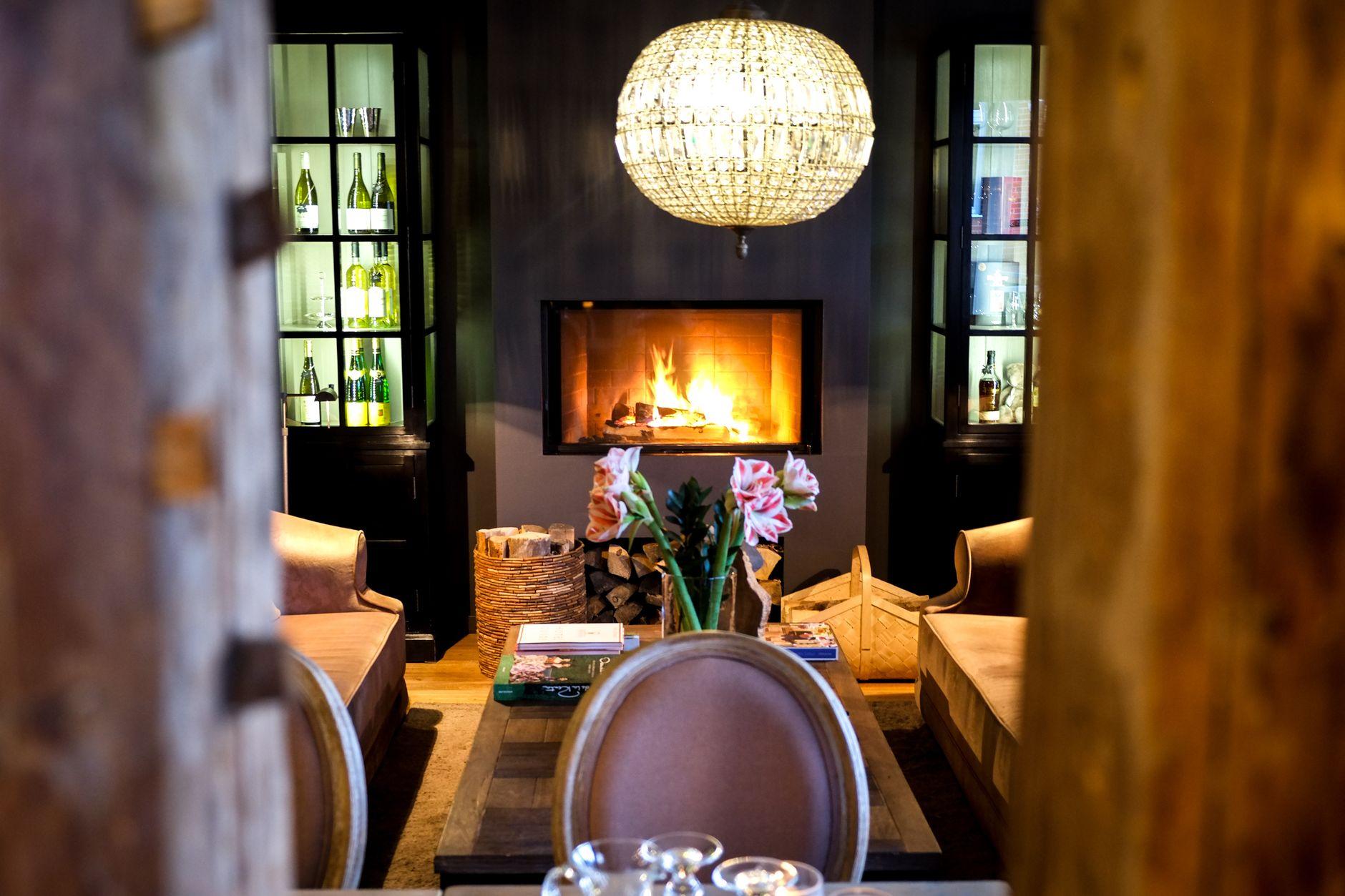
Gas Fireplace Repair in Montebello
Ask About Gas Fireplace Repair
Give the street and a line on what you have noticed. We phone back to set the visit.
What the Work Covers
Gas units in older homes can be thirty years old or more, and parts are not always available. We test the thermocouple or thermopile, the valve, the igniter and the remote receiver before naming a part, and we look at the flame and venting when it burns poorly. If a part is no longer made, we tell you, along with the realistic choices. The repair price is set down in writing before parts are ordered.
Old Gas Sets and Newer Units Fail Differently
Gas fireplaces in older houses come in two broad kinds. Many original masonry fireplaces were converted years ago with a log set and a manual valve, sometimes with a match-lit burner and no pilot at all. Others have a pilot that burns through the season and a sensor in that small flame which holds the valve open only while it stays hot. Newer units, including inserts and direct-vent fireplaces added during remodels, often fire up electronically from a remote or a button. Each type has its own weak points. Older safety pilots fail when the sensor wears out or the pilot hood clogs, leaving a pilot that refuses to stay on without someone pressing the control. Electronic units fail at their igniter, their control module or their batteries. A burner that lights but runs ragged or lifts off its ports usually points to dirt, a damaged burner or gas pressure that is wrong for the unit.
Repair starts with finding the fault, not guessing at it. We confirm gas supply at the valve, look at the pilot flame and where it sits on the sensor, measure the small voltage the sensor produces, and check the igniter, wiring and switch on electronic units. Many no-heat calls end with a cleaned pilot assembly and a fresh sensor. Others turn up a valve that has failed, a switch with a broken wire, or a remote receiver with dead batteries. Once we know the cause, you get the repair and its price before we start. Parts are ordered by model, and bringing the right one on the first trip is easier when we know the maker; the rating label is often fixed behind the trim at the bottom of the unit. After any repair we check every joint we disturbed for leaks and run the fireplace through several cycles to be sure it lights and holds.
Safety Checks That Come With Every Gas Repair
A gas fireplace that misbehaves is sometimes telling you more than that a part has failed. A flame that rolls out of the opening, soot building quickly on the glass, or condensation running down the inside of the firebox can mean the exhaust is not leaving the house the way it should. On a gas set in an older masonry fireplace, that may be a damper clamp that has slipped, a flue with debris in it, or a cap crushed by a falling branch. On a direct-vent unit, it may be a blocked or damaged vent pipe. We check the venting as part of any repair and measure carbon monoxide near the fireplace once the burner has been running a while. If venting is the problem, fixing the valve or pilot alone would not make the fireplace safe, and we tell you so. A carbon monoxide alarm near the fireplace room is worth having, and we will mention it if we do not see one.
Age catches up with gas equipment. A log set from decades ago may have a burner nobody makes anymore, and a steel firebox with corrosion holes is not something a patch can make safe. When a unit reaches that stage we explain it plainly and lay out the choices: a new log set in the existing fireplace, a sealed insert, or a return to wood if the chimney is sound. We do not push replacement when a repair will do. With a suspected leak, the order of things matters. If you smell gas, leave the fireplace and the light switches alone, go outdoors and well clear of the house, and only then phone the utility. After the utility has cleared the line, book us to trace the source. Gas fireplace repair in Montebello, Pico Rivera and San Gabriel is priced per repair once the fault has been found.
How Langley Chimney Works Works on Older Houses
Old Work First
Sound original brick and tile stay; only failed parts are replaced
Findings in Writing
Photos and plain notes after every visit
Prices Before Work
Each repair priced on paper before it starts
Room Protected
Floors and hearth covered while we work
Towns with a gas fireplace repair page
Montebello and the towns closest to it carry their own write-up for this work, covering the age of the houses there, local weather and the places next door.
CA
Gas Fireplace Repair in Montebello
This is where we are based, and 84% of the housing here went up before 1980, with 23% older than 1950. Where a postwar house kept its brick fireplace, we study how the original mortar, damper and firebox have aged before proposing any repair.
Open the town pageCA
Gas Fireplace Repair in Pico Rivera
With 71% of homes owner-occupied and 76% detached, many ranch houses here are kept by the people who live in them. A Level 2 inspection tells those owners whether the fireplace the house was built with can keep doing its job.
Open the town pageCA
Gas Fireplace Repair in San Gabriel
Some 38% of all housing here predates 1950, and the older sections still hold Spanish Revival and Craftsman homes. We aim to keep those first hearths and that early brick in service. Newer condos may have gas, a factory unit, or nothing.
Open the town pageCA
Gas Fireplace Repair in Los Angeles
Carroll Avenue in Angelino Heights still has its Victorians, and West Adams keeps its historic blocks. A good share of the old brick here was rebuilt by masons after 1971 or 1994, so on any older house we sort what is original from what was replaced.
Open the town pageOther Chimney and Fireplace Work
Chimney Sweep
Flue brushed and vacuumed with the room covered, then a plain account of what the bare tile and smoke shelf show.
Read More →Chimney Inspection
A Level 1 look at an older chimney from hearth to crown, every finding photographed and sorted by how soon it matters.
Read More →Chimney Repair
Spalled brick, open joints, a tired crown or a loose cap put right with materials that suit the age of the chimney.
Read More →Fireplace Inspection
The room side of an old fireplace looked over: firebox, damper, hearth, mantel distance and any doors added later.
Read More →Fireplace Repair
Cracked firebrick, a broken damper, a sunken hearth or loose period tile repaired while the old fireplace keeps its looks.
Read More →Chimney Level 2 Inspection
Recorded video from firebox to crown, with the attic and underfloor checked wherever the stack meets wood framing.
Read More →Chimney Cap Installation
A screened cap that fits the old crown and flue tile, anchored so it does not split soft brick.
Read More →Chimney Flashing Repair
The roof seam around an older chimney resealed with new metal let into the mortar, replacing layers of tar and patch.
Read More →Chimney Masonry Repair
Repointing and brick work on old chimneys, using mortar softer than the original brick and matched in color and joint shape.
Read More →Chimney Rebuilds
Stacks too far gone for repair taken down to firm brick and rebuilt, either matching the house or framed and stuccoed above the roof.
Read More →Fireplace Cleaning
Soot and smoke staining lifted from old brick, tile and stone, using methods tried first on a hidden corner.
Read More →Gas Fireplace Cleaning
Burner and pilot dusted out, logs returned to their marked spots and the glass cleared of haze, on old and newer gas units.
Read More →Fireplace Remodel
A new face for an older fireplace that keeps its proportion with the room, with trim and hearth brought up to current rules.
Read More →Fireplace Inserts
A sealed insert set into an old masonry opening, with a full-height liner so the old flue stops carrying exhaust.
Read More →Pellet Stove Repair
Jams, mid-burn shutdowns and failed ignition on pellet stoves tracked part by part, then the vent cleaned.
Read More →Wood Stove Repair
Older wood stoves brought back into service with new gaskets, glass, firebrick and baffle, and the stovepipe looked at to the ceiling.
Read More →Gas Logs
A gas log set fitted to an old open fireplace, with gas run to the firebox, the flue looked at and the flame tuned.
Read More →Chimney Seismic Retrofit
Older brick chimneys braced, strapped or rebuilt above the roof, so strong shaking is less likely to bring the top down.
Read More →Chimney Crown Repair
Cracked or flat crowns on older stacks sealed or recast with a slope and drip edge, so rain leaves the brick alone.
Read More →Dryer Vent Cleaning
Lint cleared from the dryer duct from end to end, with the outside flap and any crushed sections looked at.
Read More →Chimney Liner Installation
Stainless liners run inside old clay or unlined flues, sized to the appliance, joined at the base and capped at the top.
Read More →Chimney Leak Repair
Water coming in around an old chimney traced to its entry point and stopped there, not patched where it shows.
Read More →Chimney Waterproofing
A breathable repellent on old brick after repairs are done, so rain stays out and trapped moisture can still leave.
Read More →Chimney Damper Repair
Rusted, warped or seized dampers in older fireplaces freed, rebuilt or replaced, including a sealing damper at the crown.
Read More →Chimney Chase Cover
Rusted metal tops on framed chimneys replaced with a stainless top made to size that sheds water clear of the siding.
Read More →